Meditation
First part : Mindfulness
Note: It can be helpful to set a time limit for your meditation. I suggest using the meditation timer that we use during our workshops:
Mindfulness involves deliberately directing your attention to a specific object.
Exhausted ? Boring ? Try to live in Mindfulness
Mindfulness involves paying attention to the present moment, to thoughts, emotions, physical sensations, and the environment, deliberately and without judgment or labeling (for example, "This emotion is wrong" or "This sensation is undesirable"). Mindfulnes is about being fully engaged with the present moment rather than reliving the past or anticipating the future.
Mindfulness can be practiced formally through activities such as sitting or walking meditation, yoga, etc., or informally by striving to be fully present in everyday activities like drinking, eating, listening to music, looking out the window, and so on. Mindfulness meditation has its roots in Buddhism but has been practiced and taught secularly for several decades in North America and Europe.
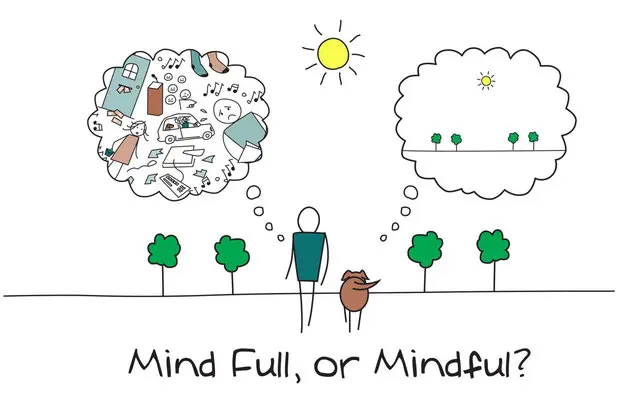
Mindfulness could help you to:
For example :
- Maximize your physical and mental well-being
- Respond better to stressful events
- Enhance your cognitive functions such as attention, memory and concentration
- Become aware of your automatic behaviors and cultivate greater freedom of choice in your actions.
- Learn more about yourself, your ways of thinking, and reacting through non-judgmental observation of the present moment.
- Foster a greater self-acceptance and kindness towards yourself and others
Research indicates that mindfulness is also effective in improving the physical and psychological symptoms associated with various medical conditions (e.g., chronic pain, cardiovascular disorders, cancer, diabetes, stress, anxiety, depression). However, mindfulness does not cure these conditions; rather, it is suggested to help better manage distress and the associated physical incapacity.
All these motivations are excellent reasons to start practicing mindfulness. However, several authors emphasize the importance of not harboring expectations of results while meditating.
In other words, meditate solely to be in contact with yourself in the present moment, rather than constantly seeking progress or a special experience: Thus, in the practice of meditation, the best way to arrive somewhere is not to seek to arrive there at all...
Note: please Sign up to access the courses. It's completely free. !
(see home page)
Go to the home page and sign upl